
Plumbing emergencies have lousy timing. The supply line under the kitchen sink lets go on a Saturday night. The basement floor drain starts gurgling halfway through a summer thunderstorm. A pipe in the crawl space splits during the first real cold snap of January, and nobody notices until it thaws.
When it happens, you really only have two jobs: stop the damage, and get the right help on the way. This guide covers what to do in the first few minutes, how to tell whether you need an emergency plumber tonight or a regular appointment tomorrow, and which Columbus phone numbers are worth saving in your phone before you ever need them.
Water on the floor right now? Shut off your main water valve (Step 1 below), then call Allegiant Plumbing at (614) 824-5002. We answer 24/7, nights and weekends included, and a licensed plumber can usually be at your door the same day.
Step 1: Shut Off the Water
This is the single most important thing you can do, and it costs nothing. Every minute water runs, it soaks further into drywall, subfloor, carpet pad, and insulation.
For a problem at one fixture, look for the small shutoff valve on the supply line. There is one behind most toilets and under most sinks. Turn it clockwise until it stops.
For a burst pipe or a leak you can't trace, go straight to the main shutoff. In most Central Ohio homes with a basement, it sits on the foundation wall closest to the street, right where the water line comes in, usually next to the water meter. In slab homes and many newer builds around Dublin, Powell, and New Albany, check the utility closet, the garage, or near the water heater.
You'll find one of two kinds of valve:
- Gate valve (round wheel): Turn it clockwise until it stops. These are common in older Columbus homes and can be stiff.
- Ball valve (lever handle): Turn the lever a quarter turn so it sits crosswise to the pipe.
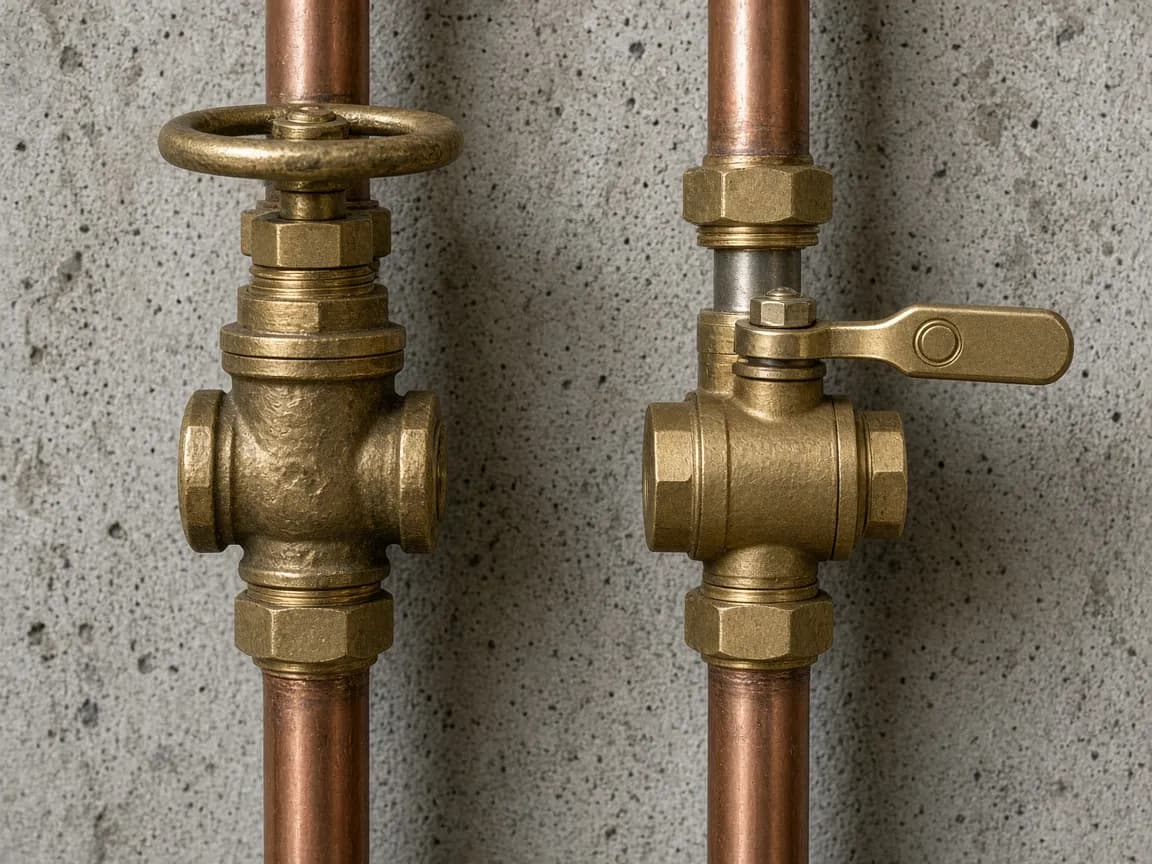
If an old gate valve won't budge, don't lean on it with a big wrench. A seized valve can snap off, and now you have a bigger leak right at the main. Call us instead and we'll walk you through your options over the phone.
Once the main is off, open a faucet on the lowest floor of the house. That drains some of the pressure and water left in the lines.
Step 2: Make It Safe
Water and electricity don't mix, so take a breath before you go splashing into a flooded basement.
- Electricity: If water is near outlets, appliances, extension cords, or your electrical panel, stay out of it. If you can reach the panel while standing somewhere dry, shut off the breakers for the affected area. If you can't do that safely, leave it and tell your utility and your plumber.
- Water heater: If the leak involves your water heater, shut off the cold water valve on top of the tank. For a gas unit, turn the control knob to "Off" or "Pilot." For an electric unit, flip its breaker.
- Gas: If you smell rotten eggs, this stops being a plumbing problem and becomes a safety problem. Don't flip light switches, use your phone inside, or start the car in an attached garage. Get everyone out, then call 911 and Columbia Gas of Ohio at 1-800-344-4077 from outside. Columbia Gas crews respond around the clock and don't charge to check a suspected leak. Once the utility has made things safe, our team can handle the gas line repair.
Step 3: Figure Out What Kind of Emergency You Have
Different problems call for slightly different first moves. Here are the emergencies we get called for most often around Columbus.
Burst or frozen pipes
Central Ohio winters freeze and thaw over and over, which is hard on plumbing. Pipes in exterior walls, crawl spaces, garages, unheated additions, and under kitchen sinks on outside walls are the usual suspects. So are outdoor faucets that still had a hose attached when the temperature dropped.
If a pipe has burst, shut off the main and call. If a pipe is frozen but hasn't burst yet (you turn on the faucet and get a trickle or nothing at all), open that faucet and warm the pipe gently with a hair dryer or a space heater kept at a safe distance. Never use a torch or any open flame. Keep an eye on it, too. A frozen pipe can crack and stay quiet until the ice melts, and then it lets go all at once.
Sewage backing up through a floor drain
This one is unpleasant, and it's also a health hazard, so keep kids and pets away from it. Stop running water anywhere in the house, which means no flushing, no laundry, and no dishwasher, because every gallon you send down the drain has nowhere to go but back up.
If you live in the City of Columbus, it's worth making two calls. Call us so a licensed plumber can find out whether the blockage is in your private sewer line, which is usually tree roots, grease, or a collapsed section of old pipe. Then report the backup to the city's 24-hour Sewer Maintenance Operations Center at (614) 645-7102. If the public sewer was overloaded during heavy rain, a city crew will look at it, and that report is the first step toward qualifying for Project Dry Basement. That city program covers an approved backflow prevention device for eligible single and two-family homes that have had sewer backups.
When the problem is on your side of the line, we can clear it with professional drain cleaning and find the cause with a sewer camera. See our main line services for what comes next.
Sump pump failure during a storm
If the pit is filling and the pump isn't running, check the simple stuff first. Is it plugged in? Did a GFCI outlet trip? Is the float switch stuck against the side of the pit? If none of that gets it going and rain is still falling, call right away. A dead sump pump in a Columbus spring storm can put inches of water in a finished basement within hours. Our sump pump team can replace a failed pump on the spot and add a battery backup so a power outage doesn't take you down next time. If yours is getting up there in years, read when to replace a sump pump.
Water heater leaking
A few drops of condensation is one thing. A steady puddle is another. Shut off the cold supply valve on top of the tank and shut off the gas or power as described above. Our guide to why a water heater leaks from the bottom explains how to tell a loose fitting from a tank that's on its way out. Either way, our water heater technicians can repair or replace it, often the same day.
Overflowing toilet
Take the lid off the tank and push the rubber flapper at the bottom down to stop more water from going into the bowl. Then lift the float, and turn the shutoff valve behind the toilet clockwise. If the toilet keeps backing up after you plunge it, or other drains gurgle when you flush, the clog is probably further down the line and it's time to call. More on toilet repair.
Water bubbling up in the yard or the street
Water pooling in the street or the curb strip when it hasn't rained may be a city water main break. Report it to the City of Columbus 24-hour Water Distribution Maintenance desk at (614) 645-7788. The city repairs its own lines, but the service line running from the street to your house belongs to you. If the wet spot is in your yard, or your water bill has jumped for no clear reason, our leak detection team can pinpoint buried and under-slab leaks without tearing up the whole yard.
Step 4: Is It an Emergency, or Can It Wait Until Morning?
Not every plumbing problem needs a plumber at 2 a.m. Here's an honest way to sort it out.
Call an emergency plumber now if:
- Water is actively leaking and you can't stop it, or you can't find or close your main shutoff
- Sewage is coming up through a drain, toilet, or tub
- The whole house has no water
- Your sump pump has failed and more rain is on the way
- Your water heater is leaking steadily, or you smell gas near it (call Columbia Gas first for any gas smell)
- Water is getting near electrical panels, outlets, or wiring
- Pipes have frozen and temperatures are staying below freezing
It can probably wait for a regular appointment if:
- A faucet is dripping
- One drain is slow, but everything else in the house works
- A toilet keeps running
- A small leak has stopped after you closed the fixture's shutoff valve
Still not sure? Call us anyway. We'll ask a few questions and tell you straight whether it needs someone tonight or can wait for a same-day appointment.
Step 5: Limit the Damage While Help Is on the Way
- Move what matters. Get electronics, rugs, boxes, and anything sentimental off the floor and away from the water.
- Soak up what you can. Towels, mops, and a wet/dry vac make a real difference. Open cabinet doors under sinks so the space can dry.
- Take photos and video of the damage before you clean up. Your insurance company will want to see them.
- Start drying fast. The EPA recommends drying wet materials within 24 to 48 hours to prevent mold, and Ohio summers make that window even tighter. Fans and a dehumidifier help.
- Skip the chemical drain cleaner. On a backed-up line, it rarely clears the clog, it can damage older pipes, and it leaves caustic water sitting in the drain for whoever opens it up next.
- Keep your receipts for repairs, cleanup, and anything you buy to dry things out.
What Happens When You Call Allegiant Plumbing
We're a family-owned plumbing company based on McKinley Avenue on the west side of Columbus, and emergency calls are a big part of what we do. Here's what you can expect:
1. A real person picks up, 24/7.
We'll ask what's going on, and if you haven't found your main shutoff yet, we'll help you find it while we talk.
2. We dispatch a licensed plumber.
Every plumber we send is licensed under our Ohio contractor license (#47909), background-checked, and an Allegiant employee, not a subcontractor.
3. You get the price before we start.
We diagnose the problem, explain the fix in plain English, and give you upfront pricing. No work begins until you approve it.
4. Most emergencies are fixed in one visit.
Our trucks carry the parts and equipment for the common stuff, from pipe fittings and water heater parts to drain machines, sewer cameras, and hydro jetting gear.
5. We clean up and stand behind it.
Every repair comes with our satisfaction guarantee.
One Columbus homeowner who called us about a leaking garbage disposal told us our plumber showed up within an hour and had it fixed about fifteen minutes later. That's the kind of night we like to give people.
We provide 24/7 emergency plumbing throughout Columbus and Central Ohio, including Dublin, Westerville, Hilliard, Powell, Grove City, Upper Arlington, New Albany, Worthington, Reynoldsburg, Gahanna, and Pickerington. See our full list of service areas.
Get Ready Before the Next Emergency
The best time to prepare is on a calm afternoon, and fall is a perfect time to do it before the first hard freeze.
- Find your main shutoff and test it. Make sure it turns, then tag it so anyone in the house can find it in the dark.
- Winterize your outdoor faucets. Disconnect garden hoses, and if your hose bibs have an indoor shutoff, close it and drain the line.
- Insulate exposed pipes in crawl spaces, garages, and along exterior walls.
- Test your sump pump by pouring a bucket of water into the pit. It should kick on and empty the pit quickly.
- Think about a leak sensor. Smart leak detection systems can text you the moment water hits the floor, and some will shut off the main automatically.
Save these numbers in your phone today:
- Allegiant Plumbing, 24/7: (614) 824-5002
- Columbia Gas of Ohio emergency line: 1-800-344-4077 (call 911 first if you smell gas)
- Columbus sewer backups, 24 hours: (614) 645-7102
- Columbus water main breaks, 24 hours: (614) 645-7788
Frequently Asked Questions
Does Allegiant Plumbing offer 24/7 emergency plumbing in Columbus?
Yes. Our emergency line is answered 24 hours a day, 7 days a week, including nights and weekends. Call (614) 824-5002 and we'll get a licensed plumber headed your way, usually the same day.
How fast can an emergency plumber get to my house?
We prioritize emergency calls over routine work and offer same-day service across the Columbus metro. Exact arrival time depends on where you are and how many emergencies are coming in at that moment, so we'll give you a realistic window when you call.
How much does an emergency plumber cost in Columbus?
It depends on the problem. Clearing a clogged line is a very different job from replacing a burst section of pipe or a failed water heater. What we can promise is that you'll get an upfront price before any work begins. For typical ranges, see our Columbus plumbing cost guide.
Who is responsible for a water line break, me or the city?
The City of Columbus repairs the water mains it owns. The service line that runs from the street to your house is the property owner's responsibility. If water is coming up in the street, call the city at (614) 645-7788. If it's in your yard or inside your home, call a licensed plumber.
What should I do if sewage is coming up through my basement drain?
Stop using water in the house, keep people and pets away from the area, and call a plumber. Columbus residents should also report the backup to the city's 24-hour Sewer Maintenance Operations Center at (614) 645-7102, since that report is the first step toward the city's Project Dry Basement backflow prevention program.
Can a plumbing problem wait until morning?
Sometimes. A dripping faucet, a single slow drain, or a running toilet can usually wait. Active leaks you can't stop, sewage backups, no water, a failed sump pump during rain, and frozen pipes in freezing weather should not. If you're unsure, call us and we'll help you decide.
Don't Wait on a Plumbing Emergency
Water damage only gets more expensive the longer it sits. Shut off the water, make the area safe, and call Allegiant Plumbing at (614) 824-5002. We answer 24/7, and we'll get a licensed Columbus plumber to you fast.