
Suppose your water leaves spots on your glasses and tastes a little off; you might assume that one system will fix everything. It won't, and this mix-up is one of the most common water treatment questions we hear from Central Ohio homeowners.
A water softener and a whole-home filtration system solve two completely different problems. Understanding which one you need (or whether you need both) can save you from spending money on the wrong fix.
They Solve Different Problems
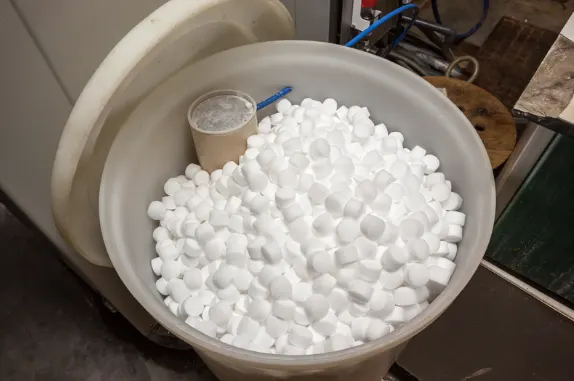
A water softener removes hardness minerals, mainly calcium and magnesium, through a process called ion exchange. As hard water passes through the softener's resin bed, those minerals are swapped out for sodium and potassium ions, leaving your water "soft."
A filtration system works differently. Instead of targeting minerals, it removes chlorine, sediment, and other contaminants that affect taste, odor, and clarity.
Neither one is a substitute for the other. A softener won't clear up chlorine taste, and a filter won't stop scale buildup. They're built to solve different problems, and knowing which one is causing your symptoms is the first step to fixing it.
Softening Doesn't Clean Your Water
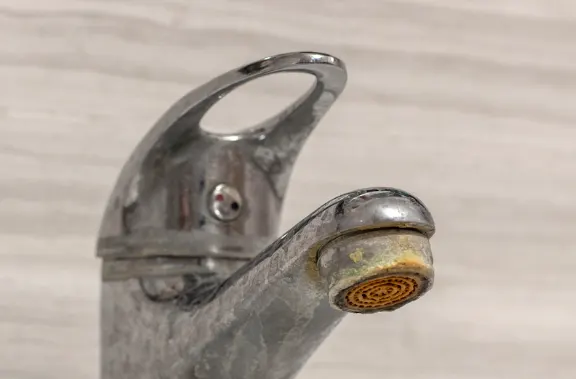
A softener's job is to protect your pipes, water heater, and appliances from scale, the chalky white buildup hard water leaves behind. That's valuable, especially in Central Ohio, where municipal water tends to run hard.
But a softener won't remove chlorine taste, odor, or sediment. Your water can be perfectly "soft" and still taste or smell off straight from the tap. If that's the complaint you're hearing at home, filtration, not softening, is the fix.
Filtration Doesn't Stop Scale Buildup
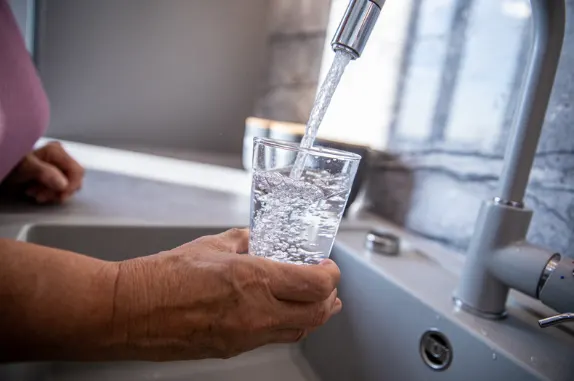
Filtration handles what a softener can't: chlorine taste and smell, sediment, and the contaminants that affect what comes out of the tap. It's the difference between water that leaves a faint pool-chemical aftertaste in your morning coffee and water that tastes clean, crisper at every faucet in the house.
What filtration doesn't do is remove the hardness minerals that cause scale. If you're dealing with cloudy glassware, stiff laundry, or white crust around your fixtures, a filtration system alone won't solve it. That's a softener's job.
Hard Water Shortens Appliance Life, and Filters Can't Fix That
This is where the softener conversation gets expensive if it's ignored. Water heaters, dishwashers, and washing machines all wear out faster under hard water, regardless of how good your filtration is. Mineral scaling inside a water heater tank, for example, makes the unit work harder to heat water and can shorten its lifespan significantly.
Filtration can't touch that mineral buildup. Only a softener addresses the root cause. If your water heater died five years before it should have, or your dishwasher's been leaving a chalky film on glasses no matter what detergent you try, hard water is a common culprit.
Many Central Ohio Homes Need Both
Between hard municipal water and the age of plumbing in a lot of Central Ohio homes, it's common to need a softener and a whole-home filtration system, not one or the other. Pairing the two gives you the full picture: a softener to protect your pipes and appliances from scale, and filtration to make sure the water coming out of every tap tastes and smells clean.
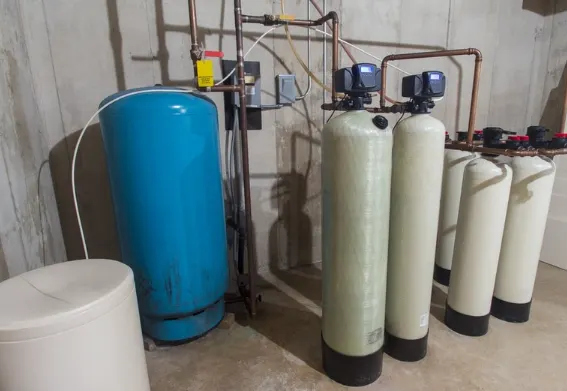
If you're only treating one half of the problem, you may be protecting your appliances but still living with bad-tasting water, or vice versa.
What About Reverse Osmosis?
Filtration and softening cover whole-home water quality, but if you're specifically focused on drinking water (say, getting the cleanest possible water at your kitchen sink), reverse osmosis (RO) is worth a look too. We cover how RO compares to softening in more detail in the companion blog Water Softener vs. Reverse Osmosis: Which Does Your Columbus Home Need?.
Not Sure What Your Water Needs?
The only way to know for sure whether you need a softener, filtration, or both is to test your water. Allegiant Plumbing offers water testing and can walk you through what your results mean for your home, no guesswork required.
Call Allegiant Plumbing Services at 614-824-5002. We'll explain your options, the costs, and help you choose what's best for your home.
Allegiant Plumbing Services proudly serves residential and commercial customers throughout Central Ohio, including 24/7 emergency service.